# Construction and planning of a gym and fitness complexes
A successful gym looks from the outside like a system that works by itself: precise space, natural flow of exercisers, available equipment and an atmosphere that attracts people to stay.
Behind every such complex is a long series of decisions that are made long before the opening stage, from planning and operational aspects to compliance with business licensing requirements for a fitness center, these decisions define how the place will look and how it will function on a daily basis. The gap between a gym that opens and a complex that manages to generate stability and profitability over time is found in the planning of the business model, the flow of exercisers in the space, the adjustment of the infrastructure and the way the training experience is actually built.
Establishing a gym in Israel is a complex system of planning, operation and user experience, when this system is built correctly, it works naturally, when there are gaps in it, they are felt in every activity. The following guide is designed to put order in the process, and to give a complete picture of what is really important to know before starting, in order to avoid costly mistakes and build a complex that works correctly from day one.
Before you start: the most common mistake in setting up a gym
One of the most common mistakes in the process of setting up a gym begins precisely at a point that seems natural - choosing and purchasing equipment. Many are immediately drawn to this stage, thinking that the equipment is the heart of the activity, but in practice it is a beginning that often leads to inaccurate decisions later on. When a clear picture of the target audience, the type of training that will take place in the complex and the way it is used throughout the day is not defined in advance, every choice, even if it is of high quality, is based on assumptions and not on planning. The result is a complex that is not fully adapted to its real needs, with gaps that become apparent only after the start of the activity.
This is one of the main reasons why the establishment of a gym, even when it is done with a high investment, does not always translate into an accurate user experience and stability over time.
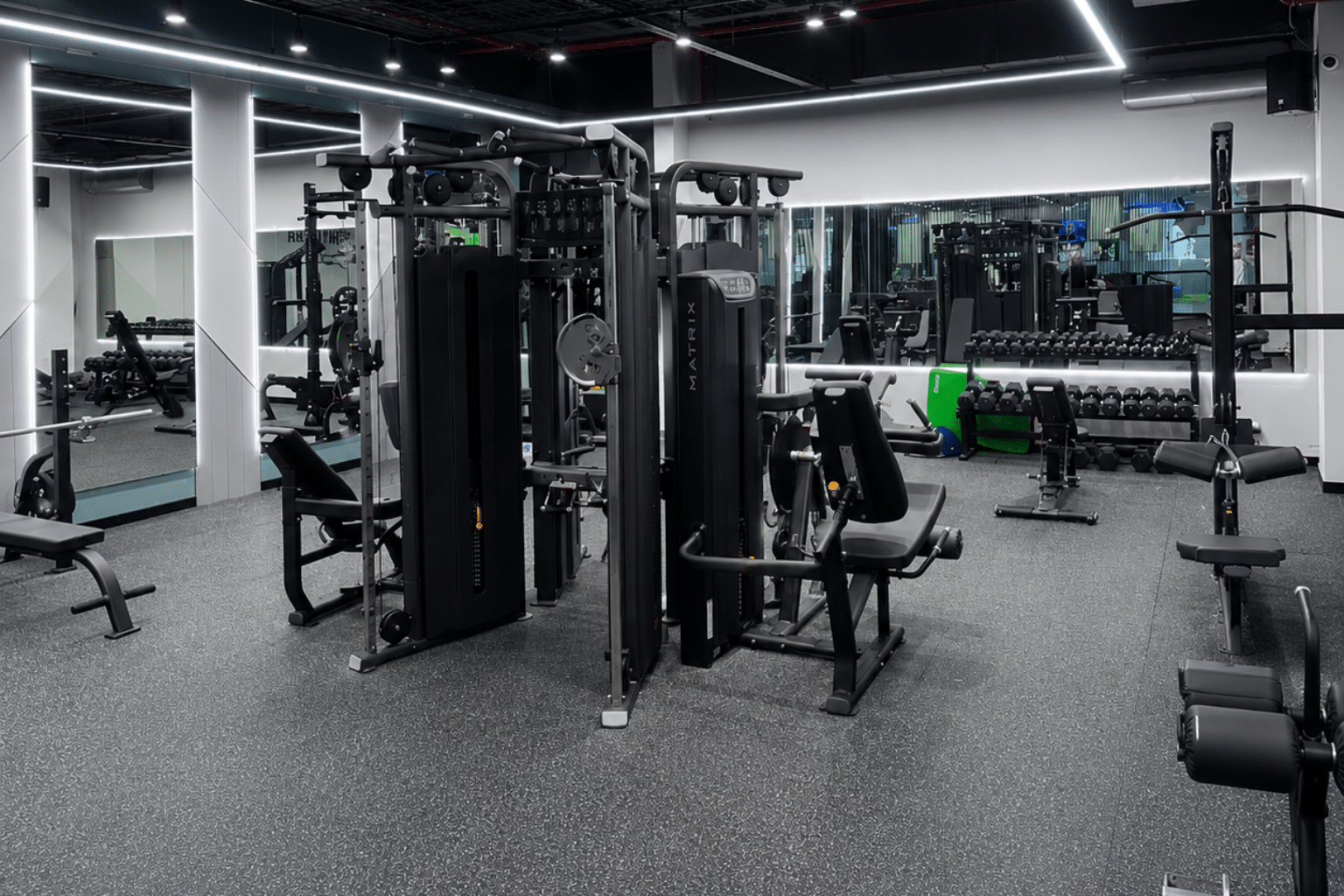
Gym SEA+ Bat Yam - EUROTEC Group. MATRIX / ZIVA / SPARTA / KRAIBURG
Golden Rule 1: Defining a concept is the basis for any process of setting up a gym
The first and most significant step in the process of setting up a gym is defining a clear concept, because it is the one that directs all the decisions that will come later. A concept is not just a matter of branding, but a complete operational framework that defines how the complex will function in practice: starting with the type of equipment required, through the number of trainees that will be in the space at any given moment, to the price level and the overall training experience. When the concept is not precisely defined, a gap is created between what the complex offers and what the audience really needs, and this gap manifests itself in inappropriate planning and an uneven user experience.
This can be clearly seen in the difference between a gym with a wide and accessible model, designed for high loads and constant turnover, and a boutique studio where the emphasis is on space, service and personal experience. The choice between these approaches is not a question of style, but a decision that shapes the entire way the place operates.
Golden Rule 2: How much does it cost to set up a gym and what really affects profitability?
The question "how much does it cost to set up a successful gym" is one of the main questions that arise at the beginning of the journey and rightly so. This is a significant investment that includes many components, from equipment and renovation, through licensing and infrastructure, compliance with professional standards to ongoing operating costs. But despite the importance of understanding the scope of the investment, focusing on ownership alone is not enough to build a stable business. The profitability of a gym is not determined only by how much was invested in it or how many trainees sign up at the beginning, but mainly by the ability to retain them over time.
A site can look full and generate revenue, but if the bounce rate is high, revenue erodes quickly. Therefore, already at the planning stage it is necessary to consider not only the initial numbers, but also the factors that affect the user experience and customer retention, such as load, equipment availability, operational comfort and a sense of order in the space. These are the parameters that connect investment and actual profitability.
Golden Rule 3: Choosing a location for a gym - not just a matter of visibility
Choosing a location for a gym is sometimes seen as a marketing decision: central location, high visibility and crowd movement. In practice, this is a much more complex operational decision, which affects every aspect of the complex's future activity. Beyond visibility and accessibility, it is necessary to make sure that the property fully matches its purpose in terms of a city building plan, meet business licensing requirements and examine the actual environmental conditions, such as availability, parking and ease of arrival during rush hours. These are not only technical details, but conditions that define whether the place can operate properly and stably over time.
Mistakes at this stage can lead to significant delays, expensive adjustment requirements and even damage to the ability to operate the business as originally planned.
Beyond the operational aspects, it is of great importance to comply with regulatory and accessibility requirements, which are basic conditions for operating a gym in Israel. Opening a gym requires a business license in most cases, along with compliance with safety regulations, sanitation conditions and guidelines of the local authority. In addition, the Law on Equal Rights for People with Disabilities requires accessibility adjustments in the space, which include, among other things, access roads, spaces between devices and adjustment of facilities and services.
These aspects are technical steps in the process and an integral part of the overall planning.
Golden Rule 4: Gym planning and exerciser flow
Proper planning of a gym goes far beyond the technical division of the space into zones, it is about building a full movement experience for the exerciser. One of the key elements in professional planning is the flow of the crowd (Flow). Proper flow planning also includes reference to accessibility in the space, in accordance with the service accessibility regulations. The way in which trainees enter the compound, move between the different areas and use the equipment throughout the training. When the flow is precisely planned, a sense of order, availability and comfort is created and the trainee can focus on the training itself.
On the other hand, when there is insufficient thinking about movement in space, congestion, waiting times and uncomfortable transitions are created, which quickly lead to frustration and damage to the user experience. This is one of the areas where planning mistakes are not always visible during the construction phase, but are felt on a daily basis after the opening of the complex and are a significant factor in customer abandonment over time.
Golden Rule 5: Infrastructure in a gym - acoustics, flooring and air conditioning
When considering what is really important to know before opening a gym, infrastructure is one of the elements that usually does not receive the attention it deserves, despite its direct impact on the functioning of the complex and the experience of the exercisers. Acoustics, flooring and air conditioning and ventilation systems are the infrastructure that defines the quality of daily use. Without proper acoustic planning, the accumulated noise from intense activity may harm comfort and even create operational limitations.
Flooring that is not adapted to the loads (according to the sports facilities standard TY 5515) and the type of activity may lead to rapid wear of equipment, unnecessary strain on the body and even injuries. At the same time, air conditioning and ventilation systems that are not designed according to the volume of the space and the load of the exercisers harm the feeling of comfort, the performance and the duration of the stay in the complex.
Unlike other aspects that can be improved or changed later, infrastructure decisions are made at an early stage and their effect continues throughout the entire life of the complex, therefore they are a major factor in the success of a gym over time.
Golden rule 6: Choosing equipment for the gym - how to choose correctly
Choosing equipment for a gym is one of the key decisions in the construction process, but just as importantly, it is one of the decisions that is easiest to make a mistake when there is no precise preliminary planning. The question "what equipment is needed for a gym" is a direct derivative of the concept, the target audience and the nature of the activity in the complex. Equipment chosen without full adjustment may create a gap between what the trainees expect to receive and what the place actually offers.
Beyond that, the expected load of use must be taken into account, since equipment that is not adapted to intensive work wears out quickly, requires frequent maintenance and affects the continuity of training. Correct choice of equipment, beyond quality or brand, is a reference to its ability to be accurately integrated into the overall system, so that it will support a smooth, available and comfortable training experience over time.
Golden Rule 7: Gym management - staff and systems
Professional management of a gym is the element that connects all the parts of the system and allows them to work together stably over time. Even when the planning is accurate and the equipment is of high quality, it is the daily operation that determines how the place will actually function and how it will be perceived by the trainees. Qualified and skilled training staff, in accordance with the guidelines of the Fitness Institutes Law is the basis, but beyond that, a high level of service, a clear managerial presence and the ability to respond to changing situations throughout the day are also required.
Along with the human factor, advanced management systems such as CRM, access control and collection tools are an integral part of the operation and enable control, order and efficiency. When one of these elements does not function properly, gaps are created that directly affect the customer experience and the ability to retain him over time. Therefore, managing a gym does not come down to running it on a regular basis, but building a balanced system that keeps the business running consistently.
In addition, regular maintenance and periodic safety inspections are an integral part of the operation and ensure that the equipment and facilities meet the requirements of the standard and provide a safe training environment over time.
Golden Rule 8: Marketing a gym - how to bring in trainees from day one
Gym marketing is not a phase that begins with the opening of the doors, but an integral part of the establishment process itself. One of the common mistakes is to assume that the planning and operation phase can be completed and only then start bringing in trainees, but in practice, demand creation should start much earlier.
The Pre-Sale campaign makes it possible to build a presence even before the complex is active, generate early registrations and examine the real level of interest in the market. Beyond that, it contributes to building an initial community and creating cash flow already in the first stages, which provides stability and security at the start of the activity.
The most expensive mistake in setting up a gym
One of the most erroneous and expensive assumptions in the process of setting up a gym is that decisions can be corrected on the fly. In practice, the planning and construction phases are the ones that determine the way the complex operates over time and the ability to make significant changes afterwards is very limited. Inaccurate space planning is difficult to adapt after the place is active, infrastructures such as flooring, acoustics and air conditioning systems are almost impossible to replace without high costs, and shutting down activity and mistakes in the flow of the crowd or in the division of areas quickly become a permanent part of the user experience.
This means that decisions made in the first stages are not temporary, but accompany the business on a daily basis and directly affect the function, profitability and customer satisfaction over time.
So how do you set up a really successful gym?
The establishment of a successful gym relies on a precise connection between all the stages of the process, into one system that works continuously and effectively. Space planning, equipment selection, infrastructure establishment, management and marketing, all elements that influence each other and the way in which they integrate is what determines if the complex will succeed in generating stability and profitability over time. The main challenge lies in the ability to implement things accurately from the very first stage, so that the entire system will operate smoothly and without operational gaps in the future, this is where professional support for the process of opening a gym comes in.
EUROTEC specializes in the planning and construction of gyms and training complexes, with a full systemic view of all project stages: from the definition of the concept to the actual opening. The accumulated experience in various types of projects allows to identify in advance weak points in the design, to understand how the complex will function under load, and to build solutions that connect the space, the equipment and the operation into a single system that works precisely.
Over the years, in various projects, the same critical points recur: loads created during peak hours, areas that are not properly utilized and equipment choices that do not match the nature of use. These are situations that occur on a daily basis and directly affect the experience of the trainees and the performance of the business. Working in the field makes it possible to identify these patterns already at the planning stage and build precise solutions that prevent them in advance. This is exactly the point where professional planning makes a difference that is not always seen in the construction, but always felt in the activity.
Questions and answers about setting up a gym
How much does it cost to set up a gym in Israel?
The cost varies depending on the size, the level of equipment and the extent of the renovation, and usually ranges from hundreds of thousands of shekels to millions of shekels. It is important to take into account ongoing operating costs and not just the initial investment.
How do you open a gym in Israel?
The process includes defining a concept, choosing a suitable location, obtaining a license, planning a space, adjusting equipment and establishing a marketing system before opening. Each step directly affects the success of the complex.
Do you need a business license for a gym?
Yes, in most cases a business license is required depending on the size of the premises and the requirements of the local authority. In addition, safety and accessibility regulations must be met.
What equipment do you need for a gym?
A gym usually includes cardio equipment, strength machines, free weights and functional equipment. The choice depends on the target audience and the nature of the training.
How long does it take to set up a gym?
In most cases, the construction process lasts between 4 and 9 months, depending on the scope of the project and the licensing processes. Early planning can significantly shorten the time.
How to choose gym equipment?
The choice of equipment is based on the type of audience, the load of use and the type of training in the complex. Correct fit prevents wear and improves the training experience.
How to bring customers to a new gym?
Through early marketing (Pre-Sale), digital advertising and community building even before the opening. Starting with an existing customer base creates a significant advantage.
Is a gym a profitable business?
A gym can be very profitable, but it depends mainly on customer retention and not just on the number of people signing up. Proper planning and a good user experience directly affect profitability.
What is the biggest mistake in setting up a gym?
Beginning without full planning of the system, including the flow of trainees, infrastructure and equipment adjustment. Mistakes at this stage are very difficult to correct after the opening.
##
Sources and additional information
- Business licensing for a gym - a professional guide
An overview of licensing requirements for opening a gym in Israel, including process steps, required permits and compliance with local authorities.
https://www.rishuy.co.il/gym/
- Business license for a gym - process and guidelines
Detailed information on the process of obtaining a business license, regulatory requirements and operational aspects in establishing a fitness center.
https://avivbarishuy.co.il/%D7%A8%D7%99%D7%A9%D7%99%D7%95%D7%9F-%D7%A2%D7%A1%D7%A7-%D7%9C%D7%9E%D7%9B%D7%95%D7%9F-%D7%9B%D7%95%D7%A9%D7%A8/
- The law on fitness centers - professional interpretation
An explanation of the sports law and the legal requirements for operating gyms, including the regulation of trainee training and safety.
https://www.siim.org.il/%D7%97%D7%95%D7%A7-%D7%9E%D7%9B%D7%95%D7%A0%D7%99-%D7%94%D7%9B%D7%95%D7%A9%D7%A8-%D7%A4%D7%A8%D7%A9%D7%A0%D7%95%D7%AA-%D7%9C%D7%A1%D7%A2%D7%99%D7%A4%D7%99-%D7%94%D7%97%D7%95%D7%A7/
- Service accessibility regulations in Israel
Detailing the requirements for accessibility adjustments in public spaces, including gyms, for the purpose of complying with the Law on Equal Rights for People with Disabilities.
https://www.right-hear.com/regulations/
- Standard 5515 - Sports facilities and equipment safety
Information on the Israeli standard for sports facilities, which includes safety requirements for fitness equipment and training systems.
https://xn—–xldimsdb8bun0b6acvwc.com/%D7%AA%D7%A7%D7%9F-5515/
- The Israeli Standards Institute - official standardization page
An official page that includes information on professional standards, quality requirements and control in the field of sports and fitness facilities.
https://www.sii.org.il/he/lobby/standardization/standard-page/?id=c5686b98-7daf-4beb-a697-ee876cd4d8e9
- Safety checks in gyms
Explanation of the importance of performing periodic safety checks, equipment maintenance and ensuring a safe training environment for the trainees.
https://www.eliav-eng.com/gym-safet