
In recent years there has been a significant change in the public perception of health and fitness and it is possible to notice a trend of increasing awareness of a healthy lifestyle, physical activity, healthy nutrition and their contribution to mental health as well. As a result, the demand for gyms increased and this creates a unique business opportunity, which combines important values with the possibility of high profitability. If you are also thinking about opening a gym, the following guide is for you.
Who is a gym usually used by?
Opening a gym can provide a solution that is not limited to different age groups or demographics. The young audience invests in a training regimen to look good and keep up with the trends related to body image as it is reflected in social networks, while the older audience is interested in maintaining health and developing physical and mental strength. Therefore, opening a gym takes place in a vibrant market that is constantly expanding and can be a decision with business logic and huge potential.
Which is better: opening an independent gym or a franchise?
One of the dilemmas regarding the issue of opening a gym, is whether to open an independent gym or a franchise. Both models have advantages and disadvantages and you must consider them carefully, as they may affect your entire business conduct, in the short term and down the road.
The benefits of opening a franchise gym
- brand recognition. Opening a franchise gym involves acquiring a well-known name and the reputation behind it, which can make it easier to recruit new customers, especially if you are new to the field.
- Franchising also offers the benefit of a proven business model, including marketing strategies, equipment recommendations such as rubber mats, weights and other equipment, and even staff training programs.
The downside of opening a franchise gym
- Franchise fees can be high and you will be required to share a percentage of your revenue with the parent company.
- Acquiring a franchise often also means an obligation to follow the administrative and other protocols of the parent company, without the ability to freely choose.
The benefits of opening an independent gym
- They will have full control over the entire business aspect, starting with the selection of the equipment such as rubber surfaces, fitness equipment, mattresses and all the related to the design of the gym, rates, marketing budgets and the like.
- This independence enables a unique brand identity, adapted to the needs and desires of the local community.
- All your profits stay with you.
The disadvantages of an independent gym
- The responsibility is very big and you will have to deal exclusively with everything related to business development, troubleshooting and setting up processes.
- Opening an independent gym requires a strong business sense, willingness to learn quickly and adapt quickly and efficiently to changes. You must ask yourself honestly, if you have these qualities.
How much does it cost to open a gym?
First, there is the cost of the physical space. Whether you rent or buy, this is a significant amount. Consider the size of the location, its geographic area and what the rates are for commercial properties there. In addition, renovation, interior design and various services required in a gym should be added to the calculation. To these are added permits, licenses and insurances, which sometimes depend on the location and size of the gym.
Quality fitness equipment is not cheap either. You will need to purchase rubber surfaces, fitness equipment, weights and more. If you skimp on this aspect, it can affect the quality of the training experience you provide, which in turn can affect customer satisfaction and retention.
In addition, there are operating costs: hiring staff, from front desk staff to personal trainers, special instructors for yoga, spinning or cardio classes. Also, there are the current costs such as electricity, water, property tax, maintenance and more.
Another important aspect is marketing and advertising. The fitness industry is highly competitive, and you will need to invest in a good marketing strategy to attract customers from established brands. This may include a website, social media advertising, traditional advertising such as flyers or billboards, discounts to attract initial customers and more.
In conclusion, understanding the components of the necessary initial capital is an important strategy that can decide the fate of the business. Build a detailed financial plan that will help you navigate the exciting but challenging journey of gym ownership.
It is important to open a gym in the right location
Choosing the right location for opening a gym is a serious task. You have to find a location that suits your business goals in the short and long term, and there are several important factors to consider:
demographics
Know your target audience: are they young, elderly, women, men? The ideal gym location should be easily accessible to this group and be located where they live, work or operate.
Meet the competitors
Is your gym the only one in the area or do you have established competitors around?
visibility
A gym in a location that people regularly walk or drive to can be a huge advantage. The visibility serves as free advertising and helps embed your gym in the local community.
Accessibility and parking
Opening a gym should be done, among other things, by getting to know the ways of access to the place, including public transportation routes and plenty of parking around.
The size of the available space
If you offer a wide variety of classes and services, you will need a larger space and a layout that will accommodate different activities without interfering with each other.
Toilets around the gym
Before opening a gym, check what is around it. A gym close to cafes, shops or offices can be more attractive.
Safety
Opening a gym in a safe and well-lit area will attract many customers and even save future headaches and potential legal problems.
Local laws
Municipal laws and regulations can significantly affect gym operations, from operating hours to parking spaces.
The development plans of the region
A developing area has the potential to contribute to the growth of your gym, so it should be preferred in some cases.
In conclusion, choosing a location is like laying the foundation for the gym. If you do it right, you can build a small empire. If you choose an inappropriate location, you may encounter business and financial struggles. You are on your way to building a successful fitness empire. So, take your time, do your research and make a choice that fits your budget and your vision for the gym.
Before opening a gym, prepare a business plan
Creating a business plan for your gym is the key to success. The business plan will guide you in the phase of developing and operating the gym and will include several aspects that are important to focus on:
- Write down the description of the business: the type of gym, which target audiences it addresses, the economic model and what sets the gym apart from the competition.
- Carry out market research that includes an analysis of the target audience, market size and competitors. Use the data to formulate an action plan for success.
- Prepare a marketing plan and sales and retention strategy. Include physical and digital marketing and formulate a marketing budget, including an expected return on investment (ROI - Return Of Investment).
- The services and products you will offer. Will you have personal training, group classes or spa services? What about a healthy shake bar or selling sportswear? Work out for yourself the cost of these services and how they will benefit your gym's revenue.
- Establish the management structure of the team, from shift managers to personal trainers and detail who does what and how their skills will lead the gym to success.
- Prepare a financial plan, including initial costs, recurring expenses, projected income, and when you expect to break even.
- SWOT analysis. This model allows you to identify your strengths, weaknesses, opportunities and threats. You should use it to understand what you do best and where you can improve.
- Check your financing options. If you are looking for external financing, write the request carefully, specify what amount you need and how you will use it.
A strong and comprehensive business plan is designed not only to impress lenders and investors. It is a dynamic document that helps you maintain focus, measure performance and pause for re-examination, if necessary. Every part of the business plan before opening a gym should help you look at the immediate and long term and make informed decisions based on the data analysis.
New or second hand equipment? The pros and cons
As mentioned, the quality of the sports equipment in your gym affects the training experiences and can make the difference between a thriving and successful gym, and a gym that is floundering in business. Naturally, many times before opening a gym the tendency is to purchase all new equipment "from the nylons". However, you should also consider purchasing second-hand gym equipment, as each option has advantages and disadvantages.
The benefits of new equipment
- quality and reliability. New equipment such as rubber surfaces, exercise benches, weights, treadmills and equipment, usually comes with a warranty. Also, it is built according to the latest technology.
- User experience. Nothing says "top-notch gym" like brand new equipment.
- Customizing the equipment for the unique aesthetic, branding or special needs of your gym.
The disadvantages of new equipment
- A high cost that will eat up a significant part of your initial capital.
- decrease in value Just like a new car, the value of new gym equipment depreciates once it's put to use.
The benefits of used equipment
- Relatively low costs
- The equipment is already ready for use and there is no need to assemble, adjust, calibrate and adjust.
The disadvantages of used equipment
- Older equipment tends to break down more often, and requires frequent maintenance.
- The selection of models and brands is limited and you may not find exactly what you want, or what fits the branding and design of the gym.
What equipment should be bought before opening a gym?
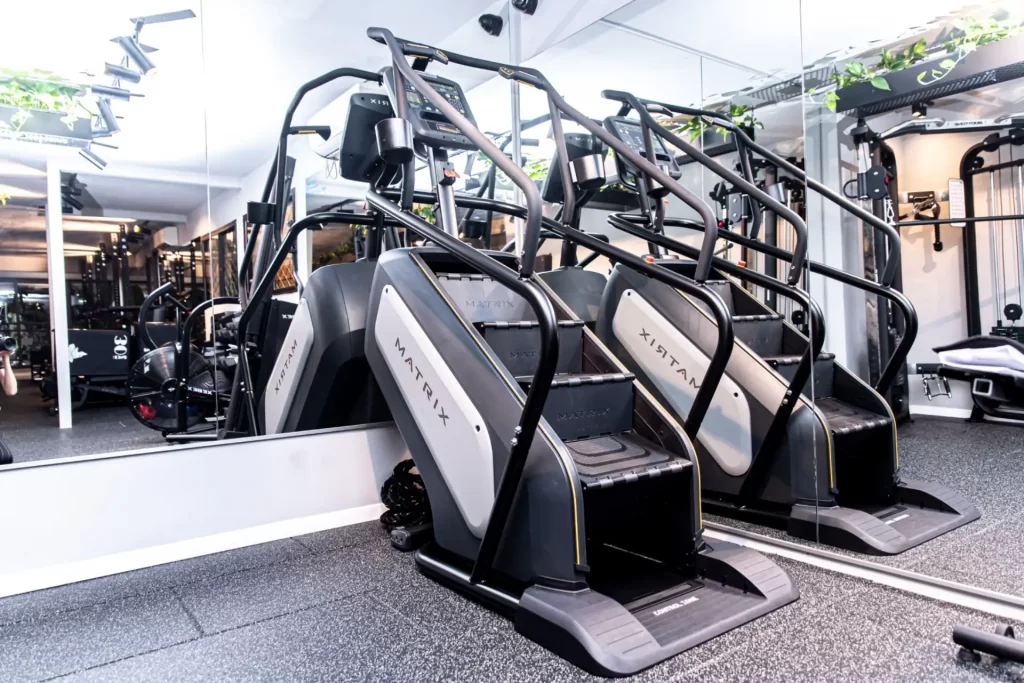
- Aerobic equipment: Treadmills, elliptical machines, rowing machines and stationary bikes, for those interested in improving their cardiovascular health.
- Strength training equipment: dumbbells and benches.
- Functional fitness equipment: kettlebells, resistance bands, balls and more.
- Group exercise equipment: If you offer classes like yoga or pilates, you'll need mats, rubber surfaces, rubber bands, and more.
- Boxing equipment: punching bags and boxing gloves.
- Spinning bike.
- Any technological element that can enrich the experience: heart rate monitors, calorie and fitness monitoring devices, interactive screens and more.
- Equipment for changing rooms, showers, sportswear boutique and juice/health food bar.
The most important thing to remember is that you don't have to build everything at once. Before opening a gym, formulate your budget and start with what is essential and can attract customers. Over time, you will be able to expand and offer more services and products within the institute.
The human team that makes the difference
A successful gym is an environment where members feel supported, guided and inspired. Therefore, before opening a gym, you should carefully consider who you will recruit for your team. The first recruits are personal trainers and certified fitness instructors. Be sure to hire only qualified trainers, who also have excellent human relations. This way your trainees will both reach their fitness goals and feel confident and trust in the trainers and the institute.
The second circle of recruits is customer service representatives or receptionists. These staff members are the first and last faces that exercisers see when they arrive at your gym, so choose people who are welcoming, efficient, and skilled at solving problems.
Also, don't underestimate the importance of a maintenance team. A clean gym is a happy gym, and equipment maintenance is essential for safety and functionality. Depending on the size of the facility, you may need a full-time or part-time cleaning staff to manage this aspect.
If your business model includes ancillary services such as a juice bar or store, you will also need employees to manage these areas. As the business grows, you can hire a marketing manager or HR representative to handle staff training, benefits, and more.
Administrative positions, such as an accountant or bookkeeper, are just as important. They will manage the salary, monitor income and expenses and assist in matters of taxation and the like. You might also consider hiring an IT person if your gym uses computers and specialized software for things like membership tracking, class registrations, or any other logistical tasks.
– Each of these roles is a piece of the puzzle that makes your gym pay. From the coaches to the administrative staff, each position is an integral part of creating a pleasant and efficient environment. Choose wisely and your team can be your greatest asset in maintaining the loyalty of members in the training community and attracting new members.
Marketing before and after opening a gym
Marketing your gym is an ongoing task, starting long before the doors officially open and continuing well beyond the launch date. Correct marketing will attract trainees, retain them and create a strong and memorable brand.
Pre-launch strategies
- Create a compelling brand identity, from logo design to purpose statement. Everything your business stands for should be encapsulated in your branding.
- Use platforms like Instagram and Facebook to create hype. Offer a glimpse of the gym's construction, new equipment or unique classes.
- Collaborate with fitness influencers. Ask them to promote your gym on social media in exchange for memberships or other perks.
- Partner with local businesses and offer cross promotions.
- Encourage people to sign up before launch, by offering discounted prices or special packages.
Post-launch strategies
- Produce an unforgettable launch event to generate buzz around the new gym.
- Use digital means such as newsletters, social media and apps to update subscribers on new classes, workshops and offers.
- Create a friend-bring-a-friend program that rewards trainees for bringing in new clients.
- Launch promotions, discounts and benefits according to trends, holidays and seasons.
- Use organic and sponsored promotion strategies.
- Take actions with community involvement to strengthen the reputation and branding of the gym.
Now you can happily open a gym
Opening a gym is much more than placing weights and mats - it is about establishing a business that combines professionalism, user experience and a healthy lifestyle. Every step of the process requires thought and planning: from understanding the target audience and its needs, through choosing the right location and the appropriate area, to designing the space and choosing the equipment that will provide the trainees with a sense of security and comfort.
A quality and well-managed gym becomes a community center - a place where people come not only to exercise, but also to feel a sense of belonging. He creates a community of loyal trainees around him, consolidates a healthy working environment for the team, and establishes a reputation for professionalism and stability over time. Proper investment in quality equipment and flooring solutions, lighting and acoustics contributes directly to the feeling of luxury and comfort of the trainees.
The EUROTEC company accompanies business owners in the field of fitness and provides professional, durable and safety equipment at the highest level. With a variety of rubber flooring solutions, strength machines, training facilities and auxiliary equipment, EUROTEC helps to establish a gym that combines design, functionality and performance - so that you can open your doors with happiness, confidence and true satisfaction.